

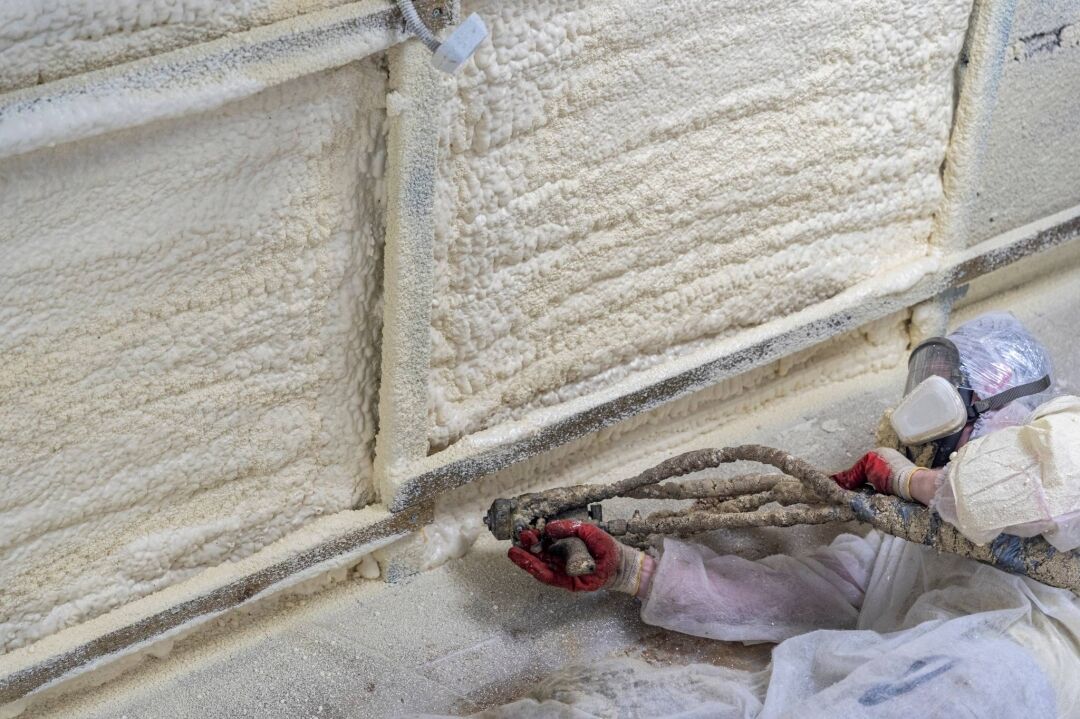
Spray foam insulation seals gaps better than fiberglass batts or blown-in cellulose. We see this difference in how each material boosts energy efficiency and climate control for your North Alabama home.
We compare R-values and key effects for spray foam, fiberglass, and cellulose to help you make the best decision for your home.
Fiberglass provides an R-value of R-3 per inch. We observe limited air sealing with this material because gaps and seams naturally allow for air leakage. It resists some moisture but can unfortunately trap dampness within your wall cavities. You will likely notice that it requires more HVAC effort to maintain your desired temperature. Indoor temperatures tend to vary more with fiberglass, and drafts often feel colder near your exterior surfaces.
Cellulose offers an R-value of about R-3 per inch, making it similar to fiberglass. It provides moderate air sealing when densely packed, though small voids may still remain. We note that while it is treated for moisture resistance, it can settle and shift over the years. You can expect moderate HVAC demand with cellulose, and temperature control can sometimes improve over fiberglass in certain assemblies.
Closed-cell spray foam delivers a superior R-value of R-6 to R-7 per inch. It creates an effective air and vapor barrier that significantly reduces air leakage and thermal bridging in your home. This material acts as a dedicated moisture barrier to keep cavities drier than loose-fill options. You will find that it lowers your HVAC workload, saves energy, and can even extend the lifespan of your HVAC system. With closed-cell spray foam, your exterior surfaces will feel warmer and annoying drafts will decrease.
We focus on air sealing because it drives comfort and energy savings in your North Alabama home.
When it comes to filling cavities, spray foam expands to easily fill gaps in wall cavities and attic spaces. It adheres directly to the cavity sides to create a continuous seal. Using a spray application unit, we can completely cover rim joists, eaves, and odd shapes. In contrast, fiberglass is comprised of batts or loose fibers that can easily leave voids. It struggles in irregularly shaped areas and around penetrations, requiring careful cutting and fitting to reduce gaps. Cellulose is a blown-in material that reduces some gaps compared to batts. However, settling can create voids over the years without dense packing, and it requires trained installers to reach optimal coverage in your cavities.
Looking at air leakage performance, spray foam minimizes air leakage by creating a complete enclosure at the assembly level. It dramatically improves blower door results when used in your attic and walls, lowering your HVAC load by reducing uncontrolled air exchange. Fiberglass permits air pathways wherever the batts do not perfectly touch the framing. This allows drafts that increase energy loss and discomfort, meaning you often need supplemental sealing with caulk or foam. Cellulose reduces leakage better than fiberglass in many cases. Because it does not bond to surfaces, seams can still remain paths for air, so it also benefits from additional sealing around penetrations.
In hard-to-reach areas, spray foam effortlessly reaches narrow cavities, odd angles, and intersecting walls. We use it to create a continuous barrier in complex modern home layouts, and it works exceptionally well around plumbing, wiring, and duct chases. Fiberglass tends to leave voids in tight corners and behind obstructions. It requires extra cutting and stuffing in complex spaces and may need additional materials to seal tricky spots. The blown application of cellulose reaches many confined spots much better than batts. However, settling in attic areas can reduce its long-term coverage, and the installer’s technique affects the results far more than the product choice.
When considering the impact on comfort and noise, spray foam reduces drafts and holds a consistently comfortable indoor temperature. It makes your rooms quieter by blocking air movement and outside sound, helping to create stable conditions for home offices and relaxation areas. Fiberglass allows for more temperature swings from air infiltration. It permits audible drafts near doors and windows, which can leave your rooms feeling less consistent for sensitive uses. Cellulose improves thermal stability when compared with loose fiberglass. It offers modest sound dampening when densely installed and performs well when combined with proper sealing methods.
For the best use cases, we highly recommend spray foam for older homes with many gaps, drafts, and intersecting walls, as well as modern homes with varied shapes that require full sealing. It is ideal for attics, rim joists, and tight cavities where maximum performance matters. Fiberglass is best suited for standard stud walls and open bays with uniform shapes, particularly in spaces that can be properly fitted and supplemented with sealants. Cellulose is often used in existing attics where adding blown material is viable. It is also suitable for retrofits that need improved coverage without full rebuilds, provided the home is properly managed for settling risks with dense pack methods.
We stress moisture resistance to properly protect your North Alabama home.
With closed-cell spray foam, we observe a powerful waterproof membrane effect. We find that it creates a continuous moisture barrier while resisting tearing and physical damage. We use it to stop water from entering through gaps around your pipes and vents. By applying it to fill tight cavities, we limit air and vapor paths entirely. We count on closed-cell foam to retain its insulating properties even if it gets wet. We rely on this material to help prevent rot and bacterial growth that cause structural damage. Ultimately, we install closed-cell spray foam to minimize moisture intrusion in your home.
In contrast, we find that fiberglass absorbs moisture quite readily. It holds water in batt form and can quickly become a breeding ground for mold if it gets wet. Because of the potential health risks, we always recommend immediate replacement after fiberglass is exposed to water. We also observe that it can compress or flatten, losing its thermal value over time. It frequently leaves gaps around irregular shapes like pipes and vents, offering very limited air sealing without the addition of separate vapor barriers.
Cellulose is made from treated fiber that resists small amounts of moisture. However, we find that it absorbs and holds water significantly more than closed-cell foam. The risk of mold and rot naturally rises if the moisture persists. We have seen settling create hidden voids that allow unwanted moisture movement through walls. Following major wetting events, we often need to completely dry and replace the cellulose.
During our inspections, we use thermal imaging to find moisture-driven heat loss in your home. We apply vapor barrier concepts to carefully control your indoor humidity. We employ moisture meters and cameras on every assessment to ensure we miss nothing. Based on our findings, we consistently recommend closed-cell spray foam in areas where leaks are most likely to occur.
In summary, we find that closed-cell spray foam offers the absolute strongest moisture protection for your property. Fiberglass fails quickly when wet and poses serious health hazards. Cellulose performs slightly better than wet fiberglass but still absorbs water. We find that spray foam effectively prevents rot and bacterial damage by keeping water out, ultimately reducing your need for future repairs.
Fiberglass insulation can lose its shape and efficiency over time, making it much less dependable for your home. In contrast, we see spray foam insulation as a truly long-term solution. Its impressive durability often lasts for decades. We apply closed-cell formulations that provide extra structural integrity to your building, greatly enhancing its overall durability.
Moisture does not compromise the effectiveness of spray foam like it does with fiberglass insulation. We recognize that damaged fiberglass generally requires complete replacement after exposure to water.
At Tennessee Valley Spray Foam LLC, we stand by our commitment to quality installation by offering a lifetime warranty on all of our spray foam applications. This guarantee emphasizes our dedication to providing lasting solutions for your insulation needs across North Alabama.
Spray foam insulation promotes a healthier home environment while strongly supporting sustainability. Eco-conscious homeowners in North Alabama increasingly choose spray foam for its superior energy efficiency and reduced environmental impact.
This insulation type greatly improves your indoor air quality by minimizing outside pollutants such as dust, dander, and moisture. Unlike fiberglass, spray foam fills gaps effectively to completely reduce any risks related to mold and rot.
We appreciate that the durability of spray foam leads to less frequent replacements, which significantly decreases material waste over time. Our expert installations at Tennessee Valley Spray Foam LLC focus entirely on long-term performance. This approach allows us to support the sustainability values that you prioritize. Choosing quality insulation solutions like our closed-cell or open-cell spray foam helps protect both your home and the environment for years to come.
The climate in North Alabama can be uniquely challenging for homeowners. We experience very hot summers and cool winters, making proper insulation absolutely essential. For homes in our region, we highly recommend spray foam insulation as the very best choice.
Spray foam effectively regulates your indoor temperatures throughout the entire year. Unlike fiberglass or cellulose insulation, it provides an excellent air seal that prevents drafts and minimizes your overall energy loss. This performance is crucial for maintaining your comfort in both cold and hot months.
Spray foam insulation also stands out with its incredible moisture resistance properties. In North Alabama, high humidity can easily lead to serious issues like mold or mildew growth. Therefore, preventing moisture buildup in your home becomes vital.
Our experienced team at Tennessee Valley Spray Foam LLC uses closed-cell and open-cell spray foams specifically designed to fit the exact weather conditions we face here. Research shows that homes insulated with spray foam reduce their HVAC workload significantly while substantially improving indoor air quality for families across Decatur and beyond.
We see clear advantages when we compare spray foam, fiberglass, and cellulose insulation for homes in North Alabama. Spray foam stands out with a remarkably high R-value that perfectly enhances your temperature control.
It fills gaps effectively to create a strong, continuous barrier against unwanted moisture and air leaks. Choosing spray foam insulation thoroughly protects your home while providing lasting durability. We proudly recommend it as the best option for energy efficiency and comfort in our unique southern climate.
Address: Huntsville, AL 35802
Phone: (256) 932-3458
Business Hours:
Mon - Sat: 7:00 AM to 5:00 PM
Sun: Closed
Huntsville, AL • Madison, AL • Guntersville, AL • Scottsboro, AL • Decatur, AL • Hazel Green, AL • Fayetteville, TN • Meridianville, AL • Mt Carmel, AL • Priceville, AL • Mooresville, AL • Athens, AL • Woodville, AL • New Market, AL • Gurley, AL • Hartselle, AL • Arab, AL • Albertville, AL • New Hope, AL • Grant, AL
Jobber Financing
5% Discount for Active Military/Combat Veterans, First Responders, and Nurses
Lifetime Warranty on Spray Foam
