
Improve comfort
Help maintain more consistent temperatures in properly insulated areas.
Drafty rooms, uneven indoor temperatures, and high heating and cooling costs can make your home uncomfortable year-round. Poor insulation may be part of the problem, especially in attics, walls, and crawl spaces. Tennessee Valley Spray Foam provides residential spray foam insulation in Huntsville, AL, and surrounding areas to help homeowners address these concerns.
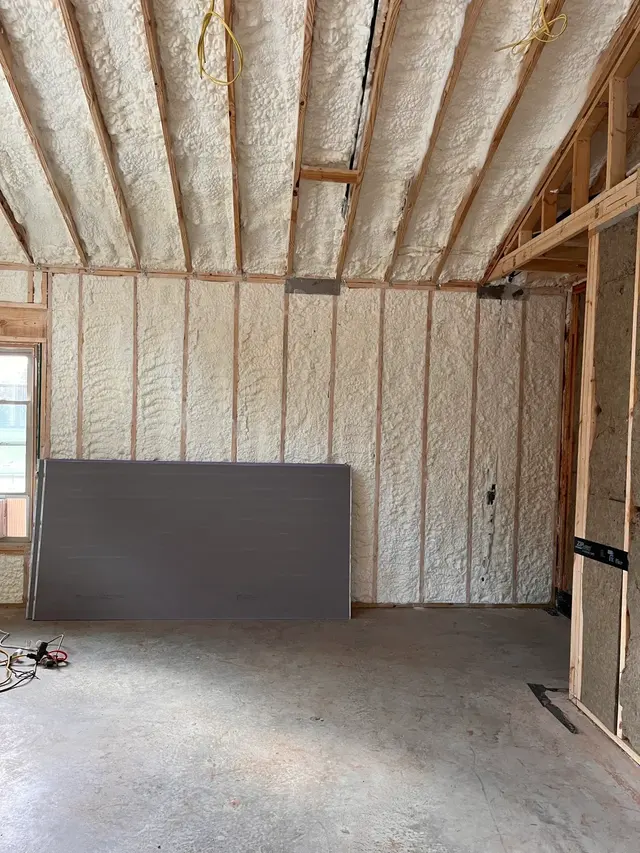
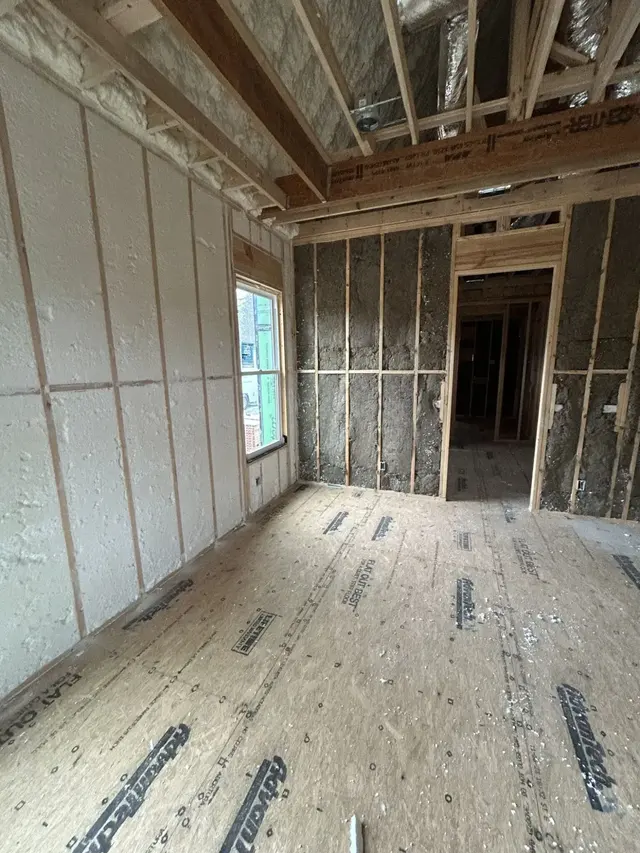
Home spray foam insulation expands during application, filling accessible gaps and irregular spaces around framing. This creates a consistent insulation layer in treated areas, reducing unwanted air movement and heat transfer.
Unlike insulation cut to fit individual cavities, spray foam conforms to the surfaces it covers. Its air-sealing properties can reduce drafts, while its thermal resistance slows heat transfer between indoor and outdoor environments.
The benefits of spray foam insulation for homes depend on the material, installation quality, and existing building conditions. Proper installation can help reduce heating and cooling demands, but insulation should work alongside appropriate HVAC systems and fresh-air ventilation.
Help maintain more consistent temperatures in properly insulated areas.
Seal accessible gaps around framing, joints, and connections.
Reduce unwanted heat transfer through insulated surfaces.
Help dampen sound transmission with suitable foam materials.
Provide coverage in irregular cavities and tight corners.
Use appropriate foam materials and assembly details to help reduce condensation risks.
Get expert residential spray foam insulation from Tennessee Valley Spray Foam, planned around your building and comfort needs.

The two main residential spray foam insulation types are open-cell and closed-cell. Each has different characteristics, so choosing the right material matters for insulation performance and moisture management.
Open-cell foam is softer, expands considerably during application, and allows more vapor movement. Closed-cell foam is denser, provides higher thermal resistance per inch, and resists vapor movement more effectively. Both materials can function as air barriers when installed at the thickness required by their product specifications.
| Feature | Open-Cell Spray Foam | Closed-Cell Spray Foam |
|---|---|---|
| Structure | Soft and flexible | Dense and rigid |
| Typical R-value per inch | R-3.5 to R-3.8 | R-6 to R-7 |
| Sound control | Helps dampen sound | Provides some sound reduction |
| Vapor permeability | More vapor permeable | Less vapor permeable |
| Common uses | Wall cavities and suitable roof assemblies | Walls, rim joists, and tight cavities |
The residential spray foam insulation R-value depends on the specific product and installed thickness. R-value measures resistance to heat flow, while air sealing and overall assembly design also affect insulation performance.
We consider cavity depth, moisture conditions, budget, and project requirements before recommending a foam type. The selected insulation must also allow the building assembly to manage moisture and dry appropriately.
Different parts of a home have different insulation challenges. Residential spray foam insulation can address accessible cavities where gaps, air leakage, or uneven insulation coverage reduce comfort.
Attics, walls, crawl spaces, and other areas require different approaches based on their construction, moisture exposure, and ventilation requirements.
Insulate suitable roof or attic assemblies to help control heat transfer.
Fill accessible framing cavities to improve insulation coverage.
Insulate appropriate surfaces while accounting for moisture and drainage conditions.
Address insulation needs in attached garages and planned conversions.
Improve insulation around sloped ceilings and other challenging areas.
Seal accessible framing connections to help reduce air leakage.
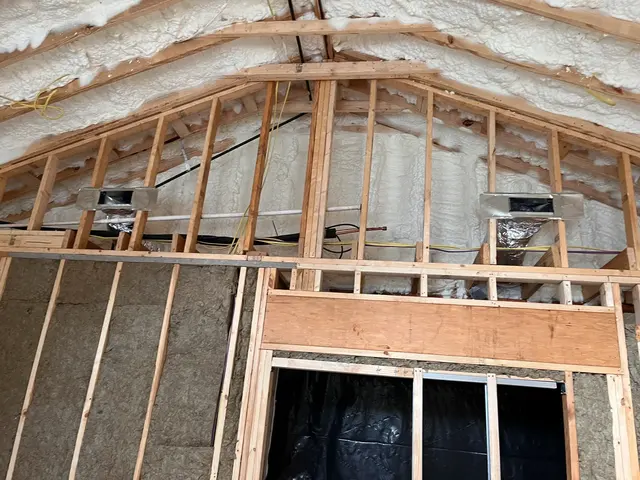
Our residential spray foam installation process focuses on proper preparation, material selection, and application to meet your home's insulation needs.
We discuss your insulation needs and inspect accessible areas, checking existing insulation, moisture conditions, and construction details.
We identify areas that need preparation and explain access limitations. We must resolve any active water leaks or moisture problems before spray foam installation begins.
We protect nearby surfaces and check temperature and substrate conditions to support proper foam adhesion, expansion, and curing.
We apply the selected foam at the specified thickness, following manufacturer instructions and recommended application conditions.
We review insulation coverage, clean the work area, and provide ventilation and safe re-entry instructions based on product requirements.
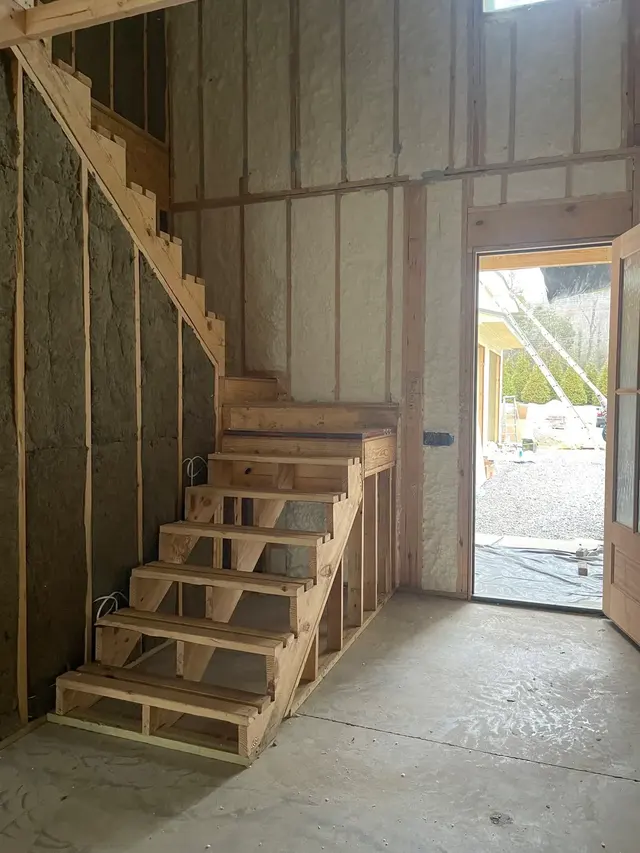
The right residential spray foam contractor understands how insulation materials, application conditions, and building requirements affect performance. Tennessee Valley Spray Foam selects suitable materials and provides insulation solutions based on each home's construction, existing conditions, and specific needs.
Our team prioritizes proper surface preparation, accurate insulation thickness, and careful application to achieve consistent coverage. We also consider moisture conditions, air leakage, and installation requirements to support reliable insulation performance and long-term home comfort.
Occupants and pets should remain outside the designated work area during indoor spraying. Safe re-entry depends on the foam product, ventilation conditions, and manufacturer instructions. Your contractor should explain the required precautions before installation.
Spray foam can generally be applied around suitable electrical wiring when installation requirements are followed. Electrical boxes must remain accessible, and heat-producing components require appropriate clearances. Existing electrical issues should be addressed before spraying.
Spray foam is not a food source for termites, but termites can travel behind or around insulation. Required termite inspection gaps and pest protection measures must remain intact, especially in areas where termite activity is a concern.
Properly installed and protected spray foam generally requires little routine maintenance. However, roof leaks, plumbing problems, renovations, or physical damage may require inspection and localized insulation repairs.
Spray foam can be suitable for older homes, depending on the condition of existing materials, moisture levels, and ventilation. An assessment helps determine whether insulation removal, repairs, or other preparation is needed before installation.
Request a quote in Huntsville, AL, and nearby areas. Contact Tennessee Valley Spray Foam to schedule an appointment.